
The Cradle of Catholicism
Vatican City, the smallest independent country in the world, holds an immense historical and religious significance. Its story is intertwined with the evolution of Christianity and the Catholic Church.
Early Beginnings
- Pagan Roots: The area now known as Vatican City was once part of ancient Rome. It was initially a marshy region called Ager Vaticanus.
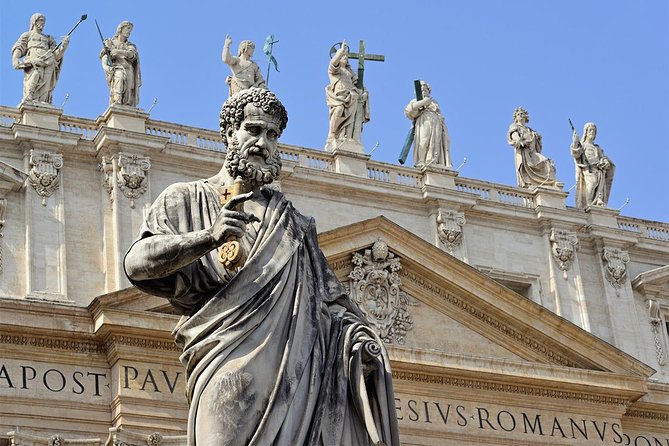
- The Tomb of St. Peter: According to Christian tradition, St. Peter, one of Jesus’ twelve apostles and the first Pope, was crucified and buried near Vatican Hill.
- Constantine’s Basilica: In the 4th century, Emperor Constantine I, a Christian convert, ordered the construction of a basilica over St. Peter’s tomb. This marked the beginning of the Vatican’s role as a major pilgrimage site.
The Papal States
- Temporal Power: Over centuries, the Popes accumulated substantial territory, establishing the Papal States as a political entity. This period saw the construction of magnificent structures like St. Peter’s Basilica and the Apostolic Palace.
- Loss of Territory: The Papal States faced numerous challenges, including invasions and political upheavals. By the 19th century, much of its territory had been lost.
The Birth of Vatican City
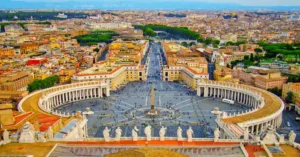
- Lateran Treaty: In 1929, the Lateran Treaty was signed between the Kingdom of Italy and the Holy See. This agreement recognized Vatican City as an independent state, granting the Pope sovereignty over a small territory.
- A Sovereign Entity: Vatican City became the smallest country in the world, with the Pope as its absolute monarch. It houses the Holy See, the governing body of the Catholic Church.
Vatican City Today
- Spiritual and Diplomatic Center: Vatican City remains a global focal point for Catholicism. It’s also a significant diplomatic player, maintaining relations with numerous countries.
- Rich Cultural Heritage: The Vatican is home to priceless art, architecture, and historical artifacts, making it a major tourist destination.
Would you like to learn more about a specific period in Vatican City’s history, or perhaps explore its role in world affairs?


https://shorturl.fm/mqv5I
https://shorturl.fm/lfYSo
https://shorturl.fm/MR3Xf
http://wish-club.ru/forums/index.php?autocom=gallery&req=si&img=5301
http://wish-club.ru/forums/index.php?autocom=gallery&req=si&img=5296
https://myteana.ru/forums/index.php?autocom=gallery&req=si&img=6671
https://mazda-demio.ru/forums/index.php?autocom=gallery&req=si&img=6396
http://terios2.ru/forums/index.php?autocom=gallery&req=si&img=4642
http://toyota-porte.ru/forums/index.php?autocom=gallery&req=si&img=3295
https://honda-fit.ru/forums/index.php?autocom=gallery&req=si&img=7114
https://mazda-demio.ru/forums/index.php?autocom=gallery&req=si&img=6411
https://mazda-demio.ru/forums/index.php?autocom=gallery&req=si&img=6590
https://hrv-club.ru/forums/index.php?autocom=gallery&req=si&img=7136
https://vitz.ru/forums/index.php?autocom=gallery&req=si&img=4918
https://honda-fit.ru/forums/index.php?autocom=gallery&req=si&img=7148
https://hrv-club.ru/forums/index.php?autocom=gallery&req=si&img=7038
https://vitz.ru/forums/index.php?autocom=gallery&req=si&img=4828
https://honda-fit.ru/forums/index.php?autocom=gallery&req=si&img=7034